

BEYOND THE FAMOUS LANDMARKS
A local selection of history, neighbourhoods, culture and viewpoints for travellers who have already met the city’s defining icons.

START HERE
La Concha Bay: San Sebastián’s defining icon
If this is your first visit to Donostia, begin here. Walk around the bay, look across to Santa Clara Island and discover why La Concha represents the city more powerfully than any other place.
Once you have experienced La Concha and the city’s major landmarks, there is still plenty of Donostia to discover. This guide brings together historic, cultural and neighbourhood places that reveal the city at a slower pace.
You smell the city in the salt carried over Paseo Nuevo, hear it in the wooden carriages of a century-old funicular and taste it when local growers bring seasonal produce to market.
These 16 recommendations are arranged by area. They are not a replacement for San Sebastián’s great icons, but a way to deepen your visit and find the places locals return to.
A route to keep exploring the city
- MorningExplore the Old Town and La Bretxa, then walk towards City Hall.
- AfternoonCross the Romantic Area and the Urumea; choose Gros or San Telmo if it rains.
- SunsetRide the Igeldo funicular and finish the day above La Concha Bay.
01 · Old Town
Where the city began: San Sebastián Old Town
Put the map away for a while. The Old Town is best discovered slowly, between historic stone façades, market stalls and the unmistakable rhythm of its pintxo bars.
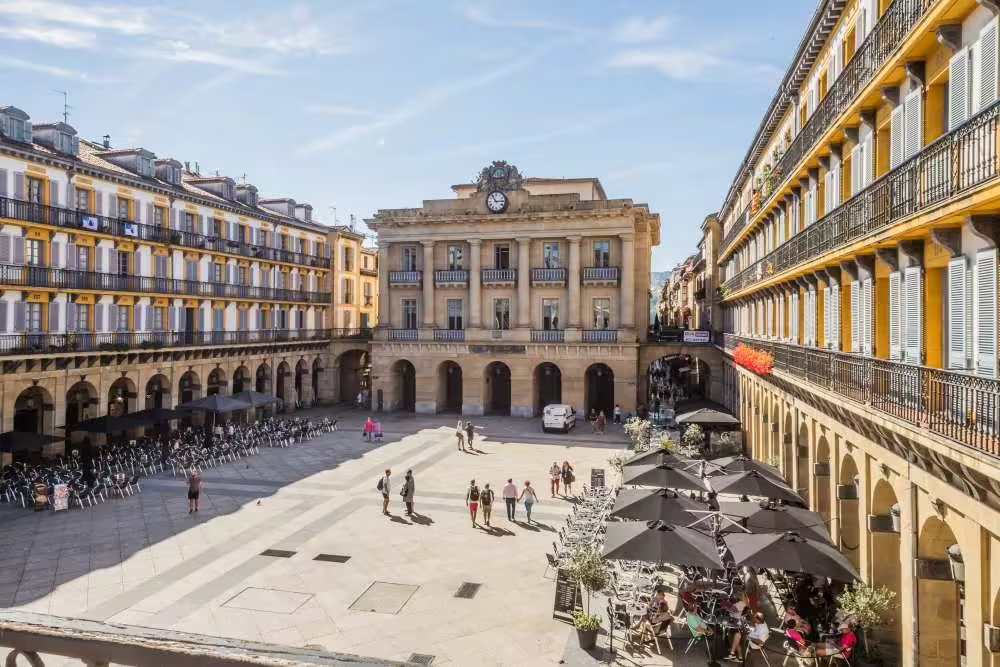
Constitution Square: the city’s living room
Look up as soon as you walk beneath one of the arches: every balcony carries a number. The square once doubled as a bullring, and those numbers marked the boxes. Today locals simply call it La Consti. It is where the city raises its flag at midnight on 20 January, opening the Tamborrada. Outside festival days, it remains one of the best places to pause and watch Donostia go by.
Read the full guide
Santa María del Coro Basilica: baroque drama
The basilica closes the view along Calle Mayor with one of the Old Town’s most theatrical façades. Stand at its doorway and look back: the spire of Buen Pastor Cathedral appears perfectly framed at the far end of the street. Inside, the mood changes completely — cool stone, soaring vaults and the image of the city’s patron saint create a welcome moment of calm.
Read the full guide
San Vicente Church: a Gothic refuge
Calle 31 de Agosto can be loud and wonderfully busy, yet a single step through San Vicente’s door brings near silence. This is the oldest surviving church in the city, with dark stone, a remarkable altarpiece and an atmosphere that feels far removed from the bars outside. You do not need to be religious to appreciate the sense of stillness.
Read the full guide
La Bretxa Market: where good cooking begins
Why does San Sebastián eat so well? Much of the answer is here. Visit in the morning, when fish, vegetables and seasonal produce set the pace. You may spot well-known chefs shopping beside local families, but the real pleasure is seeing the respect for ingredients that underpins Basque cooking. The baserritarras selling produce nearby keep that connection with the countryside alive.
Read the full guide02 · Romantic Area
The Romantic Area: Belle Époque San Sebastián
When European royalty turned San Sebastián into a fashionable seaside resort, the city gained an elegant new district of sandstone façades, gardens and broad avenues.

San Sebastián City Hall: from casino to council chamber
The building opened as the Gran Casino in 1887, closed in 1924 and became San Sebastián City Hall in 1947. Read the City Council’s official history (in Spanish).
Read the full guide
Gipuzkoa Square: a garden in the city centre
Opposite the provincial government building lies a small, romantic garden with a pond, flower clock and little bridge. Generations of local children have stopped here to watch the ducks, while adults return for its shade on warm days. It is a gentle pause between the Old Town and the shopping streets, and one of the centre’s most charming corners.
Read the full guide
Buen Pastor Cathedral: the city’s stone compass
Its 75-metre spire rises above the Romantic Area and can be spotted from much of central San Sebastián. Built in local sandstone and inspired by medieval churches in France and Germany, Buen Pastor is impressive outside but especially rewarding when sunlight pours through its stained glass. It is Gipuzkoa’s largest church and the natural focal point of the surrounding streets.
Read the full guide
Victoria Eugenia Theatre: a century in the spotlight
Set between the Urumea and the Hotel María Cristina, the Victoria Eugenia has been central to the city’s cultural life for more than a century. Film stars have crossed its stage during the San Sebastián International Film Festival, but the building is a landmark in its own right. Its golden sandstone façade looks particularly fine from Zurriola Bridge.
Read the full guide03 · Neighbourhoods
Beyond La Concha: neighbourhoods with their own rhythm
The famous bay may define the postcard, but everyday Donostia comes into focus in its neighbourhoods. Gros and El Antiguo each offer a distinct side of the city.

Gros: surf, terraces and youthful energy
Cross the river and the atmosphere changes. Gros blends the waves of Zurriola Beach with independent cafés, galleries, pintxo bars and busy terraces. It feels creative without trying too hard, and its streets remain lived-in rather than staged for visitors. Come for the surf, stay for an evening around Zabaleta and Peña y Goñi.
Read the full guide
El Antiguo: the neighbourhood where Donostia began
El Antiguo stretches behind Ondarreta Beach and has a distinct neighbourhood feel around Matia Street, with local shops, bars and Plaza Errekalde. It is a useful stop after walking along the bay and offers a glimpse of everyday life in Donostia.
Read the full guide04 · Water, culture and views
Water, memory and the view from above
San Sebastián cannot be understood without the Cantabrian Sea, the Urumea River and the stories that connect the city to both.

The Urumea River: another side of the waterfront
Donostia is not only a coastal city; it is also a river city. Follow the Urumea beneath tree-lined promenades and ornate bridges, especially María Cristina Bridge with its monumental columns. On stormy days, sea and river seem to collide at the mouth. On calm ones, this is one of the most elegant and overlooked walks in the centre.
Read the full guide
San Telmo Museum: the key to Basque culture
If you choose only one museum, make it San Telmo. A 16th-century Dominican convent is joined to a bold contemporary extension at the foot of Mount Urgull. The collection explores Basque society, history, art and identity, giving context to many of the traditions you encounter outside. It is also an excellent choice when the famous Donostia rain arrives.
Read the full guide
San Sebastián Aquarium: the city and the ocean
Opened in 1928 beside the fishing harbour, this is one of Europe’s oldest oceanographic museums. The skeleton of a North Atlantic right whale tells a powerful story about the region’s maritime past, while the 360-degree tunnel remains the crowd-pleaser. Sharks glide overhead, but the wider visit is really about understanding the city’s long and complicated relationship with the sea.
Read the full guide
Igeldo Funicular: the view you will remember
The wooden carriages have been climbing Mount Igeldo for more than a century. At the top, La Concha Bay opens beneath you, with Santa Clara Island at its centre and Mount Urgull opposite. Go around half an hour before sunset if you can: watching the city lights appear across the bay is one of those simple experiences that stays with you.
Read the full guide05 · Contemporary Donostia
A contemporary city with deep roots
San Sebastián is protective of its past, but it also keeps finding new ways to connect culture, research and food.

Tabakalera: from tobacco factory to cultural landmark
Once the workplace of hundreds of local cigar makers — women who played an important role in the city’s social history — this vast building is now an international centre for contemporary culture. Exhibitions, cinema, creative spaces and a public rooftop terrace make it worth entering even without a ticket. The glass Prisma offers a superb and still underrated view.

GOe: San Sebastián’s next gastronomic chapter
The Gastronomy Open Ecosystem, created by the Basque Culinary Center, looks beyond restaurants and recipes. It brings together researchers, students, entrepreneurs, chefs and the public to explore the future of food. Its architecture makes a statement, but the real interest lies in what happens inside: science, innovation and the city’s enduring appetite for new ideas.
Read the full guideFrequently asked questions
What should I not miss on a first visit?
The Old Town, La Concha Bay, the Romantic Area and the view from Igeldo make an excellent first route. With more time, add Gros, San Telmo and a walk beside the Urumea.
Can I explore San Sebastián on foot?
Yes. The centre, Old Town, Gros and most of the bay are easy to cover on foot. For Igeldo, combine walking with the funicular or a local bus.
What can I do in San Sebastián when it rains?
San Telmo, the Aquarium, Tabakalera, La Bretxa and the Old Town churches are reliable choices. Covered arcades and pintxo bars make moving between them pleasantly easy.
More places to discover
Practical information, history and local detail for a deeper experience of the city.

GOe – Gastronomy Open Ecosystem is rising in the Gros district of Donostia/San Sebastián as the second home of the Basque Culinary Center (BCC). Conceived as an urban hub that brings together research, advanced training, foodtech entrepreneurship, and citizen-facing activities, GOe aims to turn San Sebastián into a world benchmark for gastronomic innovation—without losing the…
Continue reading… GOe, San Sebastián’s new gastronomic ecosystem: everything you need to know
The Constitution Plaza in Donostia-San Sebastián is a historic space in the Old Town, known for its neoclassical architecture and events like the Tamborrada and the Santo Tomás Fair. A key place for local culture and festivities.
Continue reading… Plaza de la Constitución, San Sebastian: history and visitor guide

The Igeldo Funicular links the Ondarreta area with the summit of Mount Igeldo, making the ascent part of the visit. Opened on 25 August 1912, it retains its wooden cars and remains one of San Sebastián’s best-known historic transport links. This guide explains how it was built and how the railway works, then sets out…
Continue reading… Igeldo Funicular: History, Route & Visitor Guide

In the very nerve center of San Sebastian, where the historical Old Part greets the modern expansion through the emblematic Boulevard, you will find a San Sebastian institution par excellence: the Bretxa market. This is not simply a place of purchase and sale; It is a living monument, an archive of urban memory and, indisputably,…
Continue reading… The Bretxa Market: History and Flavor in the Heart of San Sebastián

San Sebastián, jewel of the Cantabrian Sea, is not only famous for its beaches such as Concha Beach or its exquisite gastronomy, but also for its vibrant cultural life. At the epicenter of this artistic effervescence it rises majestically, on the banks of the Urumea River and next to the historical Hotel Maria Cristina, a…

The San Telmo Museum, located in the heart of San Sebastian, is much more than just an exhibition space; It is a guardian of the history, culture and soul of the Basque Country. Opened in 1902, this emblematic museum stands as the oldest museum institution in the region, offering its visitors a fascinating journey through…

Origin and history of the San Sebastián Aquarium The San Sebastián Aquarium, also known as Aquarium Donostia, was born from a passion for the sea and science at the beginning of the 20th century. The spark was lit in 1903 with the visit of Prince Albert I of Monaco, renowned oceanographer, whose enthusiasm for oceanography…
Continue reading… San Sebastián Aquarium: history, curiosities and guide for the visit

In the vibrant heart of Old Part of Donostia-San Sebastián, rises majestically The Church of San Vicente Mártir, a building that is not only an active place of worship, but also a fundamental witness to the city’s long and rich history. Considered the oldest monument preserved in San Sebastián, this Basque Gothic jewel invites you…

Introduction The San Sebastián City Council is one of the most emblematic buildings in the city, not only for its relevance as the seat of the municipal government, but also for its imposing architecture and its history linked to the evolution of Donostia. Located in a privileged environment next to the Jardines de Alderdi Eder…

The Antiguo neighborhood, the oldest in San Sebastián, is much more than a simple corner of the city. With its mix of tradition and modernity, this enclave offers a journey through time that captivates everyone who visits it. From Ondarreta beach to the slopes of Monte Igeldo, Antiguo is a unique place where history, gastronomy…
Continue reading… Antiguo: Uniqueness, Tradition, and Modernity in San Sebastián

In San Sebastián, every neighborhood has its charm, but the Gros neighborhood stands out for its youthful, dynamic, and cosmopolitan character. Situated between the Kursaal Palace, Mount Ulia, and Zurriola Beach, this neighborhood offers a unique experience where sports, culture, and a lively social scene blend together. With its bohemian and modern atmosphere, the Gros…
Continue reading… The Gros Neighborhood: The young, surfer, and vibrant district of San Sebastián

The Urumea River, which winds majestically through the city of Donostia-San Sebastián, does more than enhance the urban landscape—it plays a profound role in the history, culture, and daily life of its residents. From its mouth in the Cantabrian Sea to its source in the mountains of Navarre, this river has witnessed centuries of transformations.…
Continue reading… The Urumea River: A Natural and Cultural Treasure of Donostia-San Sebastián

The Gipuzkoa Square stands as one of the most emblematic and significant urban spaces in San Sebastián, representing the perfect fusion of history, architecture, and culture at the heart of the city. This historic space, which has witnessed the evolution of the Gipuzkoan capital for over a century, is much more than just a square:…
Continue reading… The Gipuzkoa Square: The Historical and Cultural Heart of San Sebastián

La Basílica de Nuestra Señora del Coro es una de las joyas arquitectónicas más significativas de San Sebastián