
La Concha Beach did not become a symbol of San Sebastián overnight. Its story combines royal sea bathing, the rise of the Belle Époque resort, ambitious urban design and a seafront image that eventually came to represent the whole city. This page focuses on that history. For tides, facilities, access and swimming advice, use our practical La Concha Beach guide.
Continue with our guide to San Sebastián’s iconic spots to plan the rest of your visit.
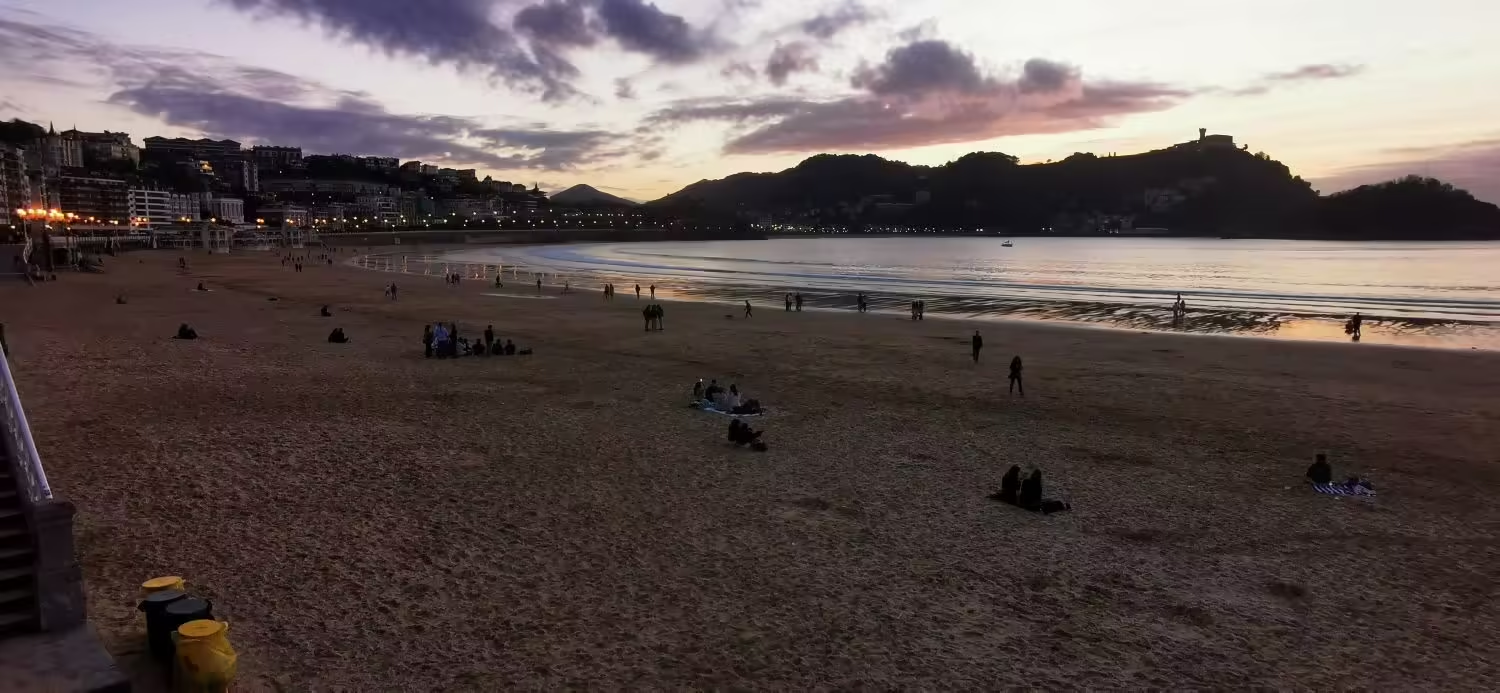
1845: Queen Isabella II and the fashion for sea bathing
A decisive chapter began in 1845, when Queen Isabella II chose San Sebastián for sea bathing following medical advice. Her presence helped turn the Basque coast into a fashionable destination for the court and wealthy visitors at a time when sea bathing was increasingly associated with health, leisure and social prestige.
This was more than a passing summer trend. The growing number of visitors encouraged new accommodation, services and urban improvements, and La Concha gradually became part of the image San Sebastián projected beyond the Basque Country.
The Belle Époque and the making of a seaside resort
During the second half of the 19th century and the early 20th century, the city consolidated its reputation as an elegant resort. Queen Regent María Cristina made San Sebastián one of her main summer destinations, while new promenades, gardens, hotels and leisure buildings reshaped the waterfront. In 1887, La Concha received the title of “Royal” beach, reflecting its close connection with the court.
Miramar Palace, built above the point separating La Concha from Ondarreta, reinforced this relationship between royalty and the bay and remains one of the best places to understand the scale of the landscape.

1912: La Perla and San Sebastián’s tourism boom
1912 was a landmark year for tourism in San Sebastián. Within a short period, the city saw the opening of the Victoria Eugenia Theatre, the María Cristina Hotel, the Igueldo funicular and the new La Perla spa.
La Perla replaced an earlier wooden bathing establishment and turned the edge of the beach into one of the clearest expressions of the city’s spa culture. The complex has changed over time, but it still recalls the era when therapeutic sea bathing played a major role in La Concha’s reputation.
1916: the railing that became a city emblem
The white La Concha railing is now almost inseparable from the beach itself. Designed by municipal architect Juan Rafael Alday, it was inaugurated in 1916 and gradually became one of San Sebastián’s most recognisable visual symbols.

From aristocratic resort to everyday city space
During the 20th century, La Concha became much more than a fashionable resort. Walking along the shore, swimming, playing on the sand and using the promenade became part of everyday life for local residents. That shift is one reason the beach remains strongly connected to the city’s identity.
The bay also hosts some of San Sebastián’s best-known events. Fireworks illuminate the waterfront during Aste Nagusia, while the La Concha Regatta fills the bay with traditional rowing each September. Major events and daily routines coexist in the same landscape.
Why La Concha keeps appearing in international rankings
La Concha has repeatedly appeared in travel selections of notable urban beaches. Those rankings change from year to year, so it is more useful to look at the features behind its reputation: a central location, a sheltered bay, Santa Clara Island, a historic promenade, good urban access and an unusually close relationship between the city and the sea.
The beach is only one part of the wider La Concha Bay, which also includes Ondarreta, Santa Clara Island and the surrounding headlands.
What remains of that history today
- The spa tradition: La Perla still recalls the era of therapeutic sea bathing.
- The monumental promenade: the railing, clocks, gardens and viewpoints are part of the La Concha experience.
- The urban connection: the beach remains fully integrated into the centre of San Sebastián.
- The international image: the outline of the bay is still one of the city’s most recognisable views.
Planning a visit today
For current practical information — tides, seasonal services, access and swimming — use our La Concha Beach visitor guide. To understand the full landscape, continue with our La Concha Bay guide.


Pingback: Best Beaches in the World: Top 10 Must-Visit Destinations - Travel fast now