
San Sebastián’s museums reveal more than a collection of objects: they tell the story of a city shaped by the sea, Basque culture, creativity and scientific curiosity. This guide brings together ten museums and cultural spaces in Donostia and nearby Gipuzkoa, from a former Dominican convent in the Old Town to a working historic shipyard in Pasaia and an open-air sculpture museum in Hernani.
Use the guide to choose by interest and location. San Telmo, the maritime museum, the Aquarium and the Real Sociedad museum are in or close to the city centre. Eureka! and Cemento Rezola are in the Miramón and Añorga areas; Albaola is across the bay in Pasaia; Chillida Leku is in Hernani; and the Balenciaga Museum is in Getaria. Check each official website before travelling: opening hours, admission and access can change with the season, holidays, matches or temporary exhibitions.
Museums in San Sebastián and nearby: what to see
1. San Telmo Museum: Basque society and history

San Telmo Museum stands between the Old Town and Mount Urgull. Its historic core is a 16th-century Dominican convent; a major contemporary extension, opened in 2011, connects the building with the city’s present. The permanent displays approach Basque society through art, objects, images and personal stories, tracing change from earlier periods to modern life. The former church, cloister and façade are part of the visit, not just a setting for the collection.
Address: Plaza Zuloaga, 1, 20003 Donostia-San Sebastián. Access: the museum is in the Old Town, within walking distance of the port and Boulevard. Planning: the official site lists seasonal hours; the general ticket is €10 and admission is free on Tuesdays, subject to the museum’s current conditions. Check accessibility, temporary exhibitions and ticket details on the official hours and prices page.
2. Basque Maritime Museum: the city’s relationship with the sea
In the harbour, the Basque Maritime Museum (Euskal Itsas Museoa) occupies the former Consulate Tower House, an 18th-century building associated with the port’s administration. Its exhibitions explore shipbuilding, fishing, navigation and the maritime networks that connected the Basque coast with the wider world. The collection gives context to the working harbour just outside and complements a walk along the waterfront.
Address: Kaiko Pasealekua, 24, 20003 Donostia-San Sebastián. Typical schedule: Tuesday to Saturday, 10:00–14:00 and 16:00–19:00; Sundays and public holidays, 11:00–14:00. Admission: €3; Thursdays are free except on public holidays. Hours may vary in summer. The museum is wheelchair accessible; groups should arrange visits in advance. Confirm details on its official practical-information page.
3. Urgull History House: 800 years of Donostia
At the summit of Mount Urgull, inside Mota Castle, the History House uses objects, models and audiovisual displays to explain the development of San Sebastián over more than eight centuries. The hill’s walls, cannons and defensive position make the surroundings part of the interpretation: from here, visitors can understand why Urgull was central to the city’s defence and see how the port and urban shoreline relate to the old fortress.
Address: Monte Urgull, 20003 Donostia-San Sebastián. The visit involves an uphill walk on pedestrian paths, so allow extra time and wear suitable shoes. Access and opening can depend on the season and conditions on the hill. Check current information with San Sebastián Tourism before setting out.
4. Donostia-San Sebastián Aquarium: marine life and ocean science

Founded in 1928 at the end of the harbour, the Aquarium combines marine collections with an account of the region’s relationship with the sea. Its oceanarium tunnel places visitors among sharks and other marine species, while the tanks and interpretation areas introduce habitats and marine life at closer range. The Aquarium is a strong option for families and for a rainy-day visit, but it also suits anyone interested in the coast’s natural history and the work of the Oceanographic Society of Gipuzkoa.
Address: Plaza de Carlos Blasco Imaz, 1, 20003 Donostia-San Sebastián. Current opening times, ticket options and accessibility information are updated on the Aquarium’s official English site. Allow time for the harbour and seafront walk around the visit.
5. Eureka! Science Museum: hands-on learning in Miramón
Eureka! is an interactive science centre in the Miramón technology district. Its more than 8,000 square metres bring together participatory exhibits, a planetarium and Animalia, where visitors can learn about animals and habitats. Rather than viewing science only through display cases, visitors can experiment with ideas and phenomena directly. This makes the museum particularly suitable for families, school-age visitors and anyone looking for an activity beyond the city centre.
Address: Paseo Mikeletegi, 43–45, 20009 Donostia-San Sebastián. Check the Basque Country tourism listing and the museum’s website for current opening hours, planetarium sessions, activities and admission. Plan transport to Miramón separately from a city-centre walking itinerary.
6. Albaola: The Basque Maritime Factory
Albaola in Pasai San Pedro is both a museum and a working maritime heritage project. Its shipyard reconstructs historic Basque vessels with traditional techniques; the best-known project is the replica of the 16th-century whaling ship San Juan, wrecked off Newfoundland and recognised as an important example of underwater cultural heritage. Seeing the work in progress gives the visit a living dimension: shipbuilding is explained as a craft, a body of knowledge and part of the region’s history at sea.
Address: Ondartxo Pasealekua, 1, 20110 Pasai San Pedro. Public transport and a walk from the stop are practical options; the museum’s current visitor information identifies the E09 bus route. A general visit costs €10, with reduced admission available; guided visits and groups have separate arrangements. Booking ahead is recommended for guided tours. Check seasonal hours, access and tickets through Albaola’s official visitor and ticket information.
7. Museum Cemento Rezola: the material behind the city
In Añorga, the Museum Cemento Rezola looks at cement as an industrial material that has shaped buildings, infrastructure and everyday life. Its displays connect manufacturing and engineering with design, art, the environment and the social history of the local industry. It offers a different perspective from the city’s art and heritage museums, and helps visitors notice the material choices behind the urban landscape.
Address: Avenida de Añorga, 36, 20018 Donostia-San Sebastián. Admission is free. The published schedule is Tuesday and Thursday, 10:00–16:00, and Wednesday and Friday, 10:00–14:00; it is closed on Mondays, weekends and public holidays. Confirm any changes and current exhibitions on the official museum website.
8. Museum Real100 at Reale Arena: Real Sociedad’s history
Real Sociedad’s museum, officially presented as Museum Real100, is inside Reale Arena. Its story follows the club from its beginnings through the people, teams and sporting moments that have shaped its identity. The stadium setting adds context to the displays and makes this a natural stop for football supporters, while a stadium tour can extend the visit when fixtures and events allow.
Address: Anoeta Pasealekua, 1, 20014 Donostia-San Sebastián. The seasonal schedule is generally Tuesday to Saturday, 10:30–13:30 and 16:30–19:30 from October to April, and Monday to Saturday at the same hours from May to September; it is normally closed on Sundays and public holidays. On matchdays, opening is linked to kick-off, and tours may be affected by fixtures or other events. Museum admission and combined museum-and-tour tickets are available. Verify the current timetable and prices on Real Sociedad’s official history page before travelling.
9. Chillida Leku: sculpture in a landscape
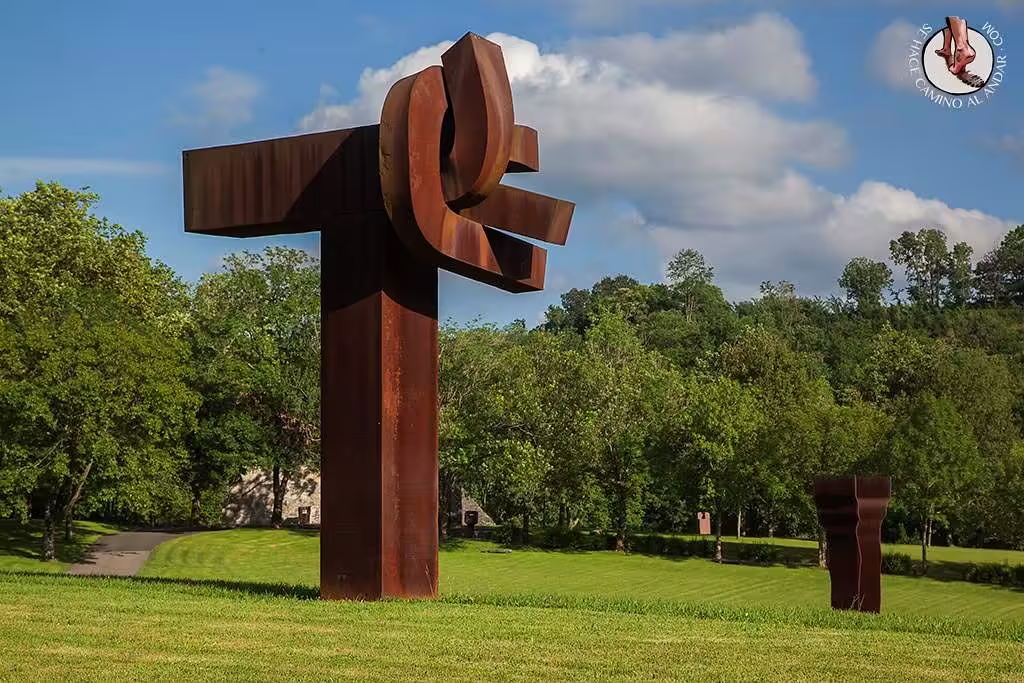
Chillida Leku, in Hernani, is dedicated to the work of Basque sculptor Eduardo Chillida. Monumental pieces in steel and granite stand among trees and open lawns, while the Zabalaga farmhouse houses further works and exhibitions. The relationship between sculpture, space, light and the changing landscape is central to the visit; it is not a conventional sequence of indoor galleries. Set aside time to walk through the grounds at a relaxed pace.
Address: Barrio Jauregi, 66, 20120 Hernani. The museum is usually open Thursday to Monday, 10:00–19:00, and closed Tuesday and Wednesday; check seasonal updates before visiting. There is free parking, and the BU05 bus runs directly to the entrance. Adult admission is listed at €14, with reduced rates available. Confirm current access, exhibitions and tickets on the official practical-information page.
10. Cristóbal Balenciaga Museum: the designer’s legacy in Getaria
In Getaria, the Cristóbal Balenciaga Museum explores the life and work of the couturier born in the town and his lasting influence on fashion. The collection and changing displays show the construction, silhouette and detail of garments, giving visitors a close view of the technical skill behind Balenciaga’s designs. The museum stands beside Aldamar Palace, whose history is connected with the designer’s early years and the local setting that shaped his story.
Address: Aldamar Parkea, 6, 20808 Getaria. The museum uses seasonal opening hours and timed admission; booking online is advisable, especially during busy periods. Standard adult admission is listed at €14, with reduced rates and free entry for eligible visitors. The museum has no visitor car park, so allow time to find parking in town and walk to the building. Check current exhibitions, hours and ticket conditions on the official English visitor page.
How to choose a museum for your visit
For Basque history and local identity: start with San Telmo, then add the Urgull History House if you have time for the uphill walk. For the sea: combine the harbour-side Maritime Museum with the Aquarium, or make a separate trip to Albaola to see historic shipbuilding. For a family or rainy-day plan: the Aquarium and Eureka! offer hands-on and visual experiences. For art: Chillida Leku merits a half-day because of its grounds and location outside the city; the Balenciaga Museum pairs well with a visit to Getaria. For football: check Museum Real100’s schedule against the match calendar before planning a stadium tour.
Most central museums can be reached on foot from the Old Town, harbour and city centre. Miramón, Añorga, Pasaia, Hernani and Getaria require separate transport planning, so avoid treating all ten as one walking route. For a broader orientation, see our guide to discovering San Sebastián. Museum schedules, prices, tours and access arrangements can change; use the official links above for the final check on your visit date.
Museums: a window into San Sebastián
Together, these museums show how the character of Donostia extends beyond its beaches and architecture. Basque society, maritime work, scientific discovery, industrial design, football and contemporary sculpture each add a different layer to the city and its surroundings. Choosing even one museum can bring useful context to a stay; visiting several across the wider area reveals how strongly local identity is connected to landscape, craft and community.


